Last verified:
When I arrived in 2018 the coffee here was bad in a way that was difficult to explain to people who had not tried it. That has changed completely. Shenzhen now has competent espresso in every district, a small group of roasters doing genuinely serious work, and a domestic chain culture that has made a drinkable latte cheaper than a bottle of juice. Brunch has followed the coffee, more slowly and considerably more expensively.
What brunch means here
Two different meals are hiding under one English word, and it saves confusion to separate them.
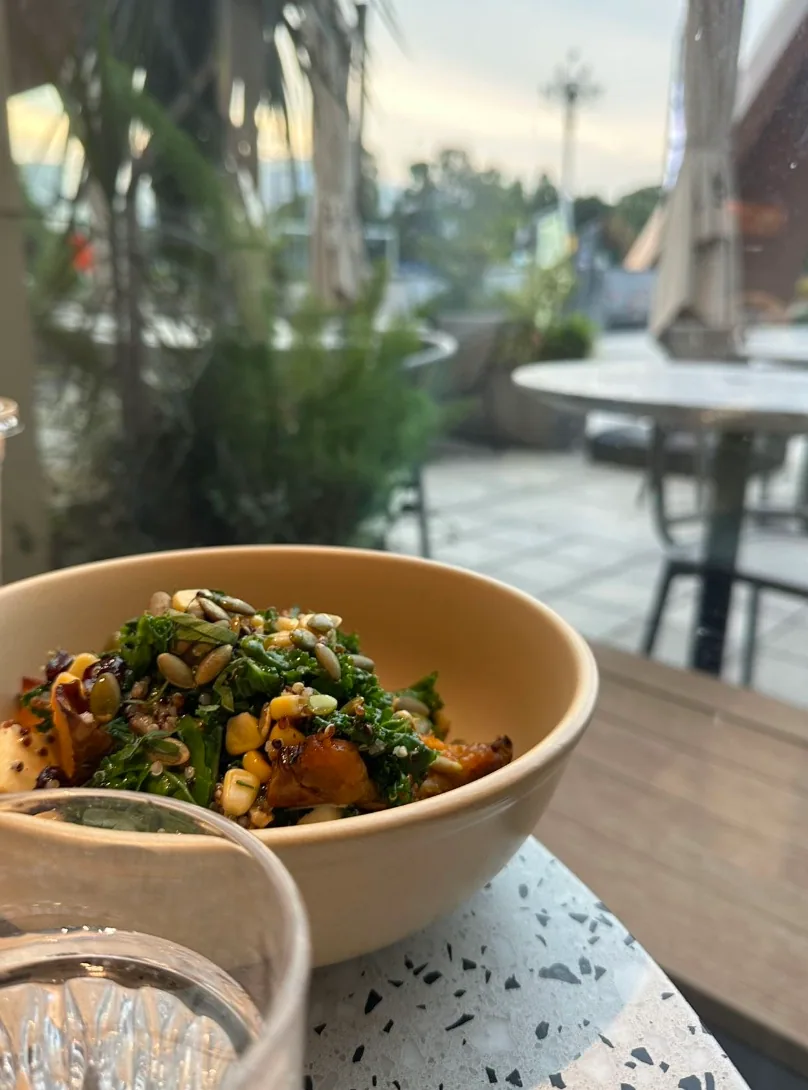
The first is Western-style weekend brunch: eggs, sourdough, avocado, a flat white, somewhere between 11am and 2pm on a Saturday. In Shenzhen this is an expat and young-professional habit rather than a local one. It exists in maybe a few dozen rooms across the city, concentrated in Shekou, Nanshan and the Futian malls, and it costs roughly what it would in a mid-sized European city — expect ¥80–150 a head with a drink.
The second is what most of the city actually eats before noon: zaocha (早茶), which is dim sum with tea, from about seven in the morning until early afternoon. It is cheaper, better value, far more social, and the thing to do at least once a month if you live here. I have written the good rooms up on the Cantonese page, and I have put two of the easiest ones at the bottom of this list so you have the option in front of you.
One more thing worth naming is that a lot of Shenzhen café culture is design-led first and coffee-led second. Rooms get built to be photographed, run hot for eighteen months, and quietly close. That is not a criticism — some of them are lovely — but it does mean the list below leans towards places that have already survived that cycle.
Where the cafés cluster
You will not find good coffee by wandering. It sits in five or six pockets, and it is worth learning them.
- OCT-LOFT, Nanshan — a converted factory compound of galleries, bookshops and small independents. The highest concentration of serious coffee in the city, and the most pleasant place to spend a weekday morning.
- Nantou Ancient City, Nanshan — restored lanes and a newer wave of small roasters. Better than OCT-LOFT for a walk, slightly thinner for choice.
- Sea World and the surrounding blocks, Shekou — the densest brunch cluster, because this is where a lot of the foreign community lives. The rest of Shekou eating is on my Shekou restaurants page.
- Houhai, Nanshan — office towers, so the cafés here are built around people working. Reliable, less charming.
- The Futian malls — COCO Park, Central Walk, UpperHills, the podium floors. Chains and chain-adjacent independents. Convenient rather than interesting, with the exception of a few rooms out in Shuiwei and the other urban villages.
- Dongmen, Luohu — the fewest cafés of any of these, but the ones that exist tend to be run by people with a point to prove.
Prices, and when things actually open
Treat all of these as ranges rather than quotes.
- A flat white or latte in an independent café: around ¥25–40.
- The same drink from a domestic chain — Luckin and its many competitors: often ¥10–20 once you use the coupons in the app, which everybody does. This is the single biggest change in the city’s coffee habits over the last five years.
- A pour-over of something single-origin: expect ¥40–70.
- A full sit-down brunch with a drink: ¥80–150 a head. Hotel brunch buffets run well above that.
- A pastry from a mall bakery: ¥8–20.
The timing catches people out. Cafés in Shenzhen open late. Ten in the morning is common, eleven is not unusual, and a few of the specialty rooms do not bother before noon. If you want coffee at eight you are looking at a chain, a convenience store, or your hotel. Kitchens serving brunch usually start around eleven.
Weekends are the other trap. Anything that has been photographed a lot will have a queue between about 11am and 2pm on Saturday and Sunday, and many places run the queue through a WeChat mini-programme rather than a paper list — you scan, take a number, and walk around until it buzzes. The straightforward fix is to go on a weekday morning instead. The same room, half empty, is a different experience.
Have WeChat Pay or Alipay working before you sit down. Cash remains legal tender and businesses are not supposed to turn it away, but in practice a lot of cafés now take the order by QR code at the table, so there is often no counter transaction to fall back on and staff may have no float. Treat cash as a fallback that will work eventually rather than the smooth option.
Café Wi-Fi here usually wants a mainland mobile number and an SMS code before it will let you on, which is awkward if you have just landed. The practical answer is to tether from your own phone instead. Registration requirements for local SIMs are set nationally and do change, so confirm the current rules with the official source or your operator before you rely on them — my SIM card page covers the general shape of it.
Ordering coffee without Chinese
Most independent cafés have English somewhere on the menu, and the chains use photographs, so you can get through this without a word of Chinese. It is smoother if you know six of them.
- 美式 (měishì) — Americano. 拿铁 (nátiě) — latte. 澳白 (àobái) — flat white.
- 热 (rè) — hot. 冰 (bīng) — iced. Iced is the default assumption in summer, so say if you want hot.
- 不加糖 (bù jiā táng) — no sugar. Worth learning: a lot of chain drinks arrive sweetened unless you intervene, and the sweetness level is usually a menu option.
- 燕麦奶 (yànmài nǎi) — oat milk, now standard almost everywhere and usually a few yuan extra.
- Dirty — espresso poured over cold milk so the two stay separated. It is usually credited to a Tokyo café rather than a Chinese one, but it was taken up here so thoroughly that it now sits on more or less every menu in the country, and it is ordered by the English word. Order one at Jifu.
Working in a café
Yes, laptops are normal, and nobody is going to move you along. Shenzhen is a city of people working odd hours, and the larger café rooms are built for it. A few rules that keep everyone comfortable:
- Buy something every couple of hours. That is the whole social contract and it is not enforced, but it is noticed.
- Do not take a table for four on your own during weekend peak. On a weekday, nobody cares.
- Power sockets are common in mall cafés and the bigger all-day rooms, and rare in small specialty bars where the seating is a counter. Check before you commit to three hours.
- Video calls out loud are the one thing that will genuinely annoy people. Take them outside.
Bakeries, which are better than you expect
The domestic bakery scene is one of the quiet pleasures of living here and it gets almost no attention from foreigners. Almost every mall has a chain bakery on the basement or ground floor, and the standard is generally high: egg tarts, pineapple buns (菠萝包, which contain no pineapple), sausage rolls, taro and red bean breads, and an increasingly good line in croissants and sourdough. The bread is softer and sweeter than the European equivalent — that is a preference, not a failure, and it is worth meeting on its own terms rather than complaining about it.
Two practical notes. The Hema supermarkets scattered across the city bake through the day and their bread counter is a reasonable default if you are not near anything better. And the Hong Kong-style bakeries in Luohu, near the border, do the older version of all this — cheaper, less styled, and often the best egg tart within a kilometre.
Work with me