Last verified with Shenzhen Government source:
Shenzhen grew up after the metro was a solved problem, which is why the network feels less like something bolted onto an old city and more like the thing the city was arranged around. I have driven here since 2019 and still take the train for most of what I do — the car earns its keep on airport runs, big shops and the trips out of the city, and almost nothing else.
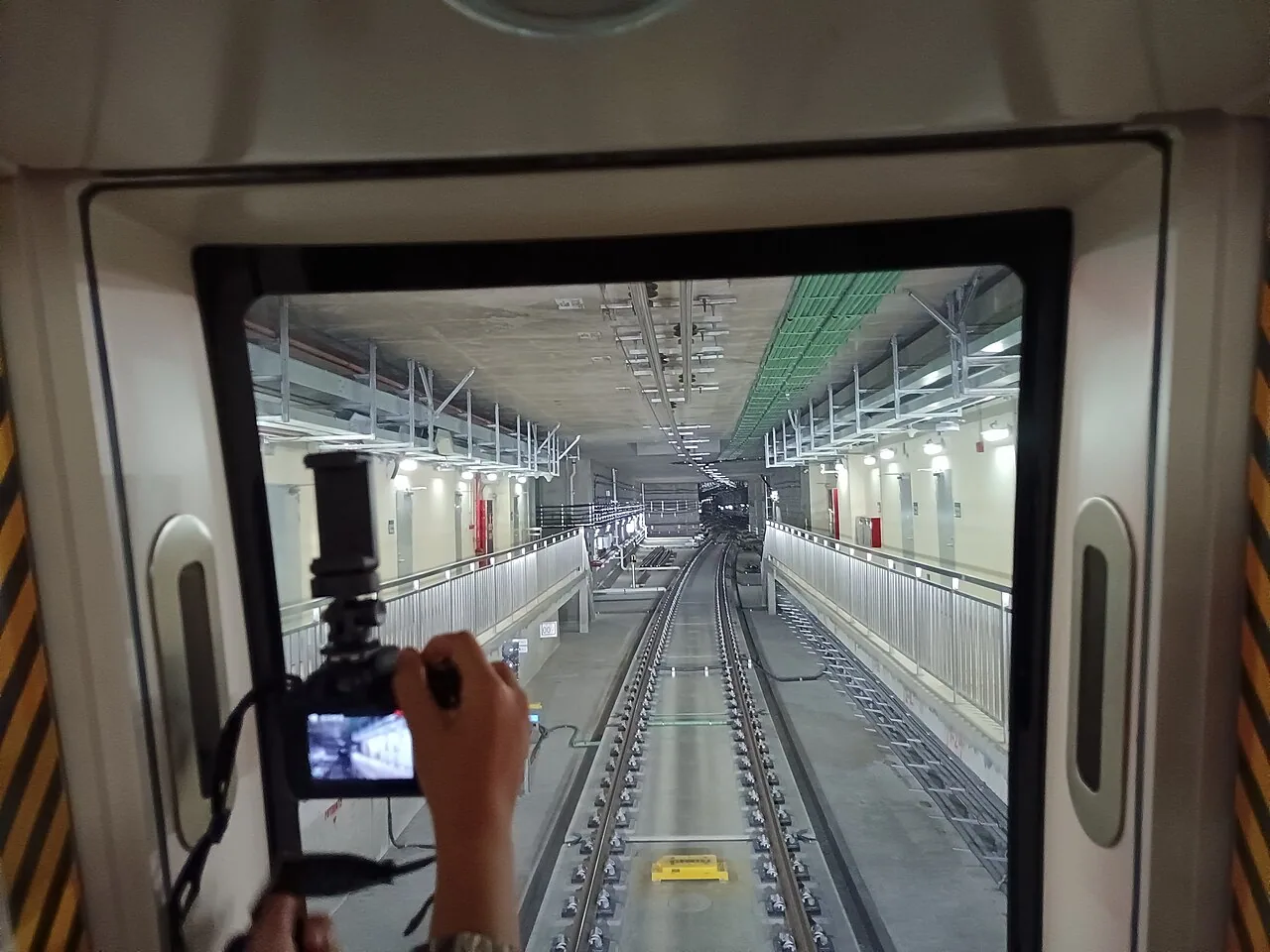
How much of the city it actually reaches
The system runs to more than a dozen lines and several hundred kilometres of track, and it is still opening more — the Line 13 northern extension came into service in June 2026 and pushed up the western flank towards Guangming. In practice, if you are going anywhere in Luohu, Futian, Nanshan, Bao’an, Longhua or the Longgang core, there is almost certainly a station within a ten-minute walk. Trains are clean, air-conditioned to the point of being cold, and run every two to five minutes on the busy lines.
The one thing that regularly costs newcomers time is not the train — it is the exit. Big stations have lettered exits (A, B, C1, D2) spread over several hundred metres of underground concourse, and coming up at the wrong one at a place like Convention & Exhibition Center can cost you ten minutes and a road crossing. Amap and Baidu both tell you the exit letter. Read it before you get off, not after.
The four ways to pay
All four work. Pick two, because the day your phone dies will be a Friday.
- Tap your own bank card. Since June 2026 Shenzhen Metro has been trialling tap-to-ride with Visa, Mastercard, American Express and JCB. The important caveat: it works at marked gates, not every gate. Look for the contactless symbol on the reader — the enabled gates tend to be the wide ones near the customer service window. If you tap a normal gate and nothing happens, walk along the row rather than trying harder.
- The Alipay transport QR. Open Alipay, find the transport or ride-code section (乘车码), and add Shenzhen Metro. You scan the code on the flat reader on top of the gate. Turn your screen brightness up; the readers are fussy in daylight near street-level entrances. WeChat has an equivalent mini-programme if you live inside WeChat instead — see setting up WeChat and Alipay.
- A Shenzhen Tong card (深圳通). A physical stored-value card, sold at station customer service centres and many convenience stores. It usually carries a small fare discount, works on buses and ferries as well as the metro, and — the real argument for it — needs no battery and no signal. Top it up at the machines with cash or mobile pay.
- A single-journey token (单程票). The green plastic disc from the ticket machines. Tap it on entry, drop it into the slot on exit. Machines take mobile payment and small notes. Fine for a one-off; tedious as a habit.
If you somehow enter without a valid tap-in — a gate that opened for the person ahead, a token that failed — you will be charged the maximum fare on exit. Go to the customer service window at the exit station rather than arguing with the gate. They sort it out in about a minute.
What a trip actually costs
Fares are distance-based and start at around ¥2 for a short hop. Most journeys I make inside the central districts come in between ¥3 and ¥6. A genuinely long cross-city run — say Luohu out to the far end of Bao’an — reaches the top of the scale, which is around ¥11. Futian to the airport on Line 11 is typically somewhere around ¥8–10. Fares are set by the operator and are revised from time to time, so treat these as the shape of it rather than a tariff table.
Line 11 also runs a paid business carriage (商务车厢) at the front of the train, with wider seats and luggage space. It costs several times the standard fare and is bought separately at the platform or in the app. With two suitcases at 7pm, I think it is worth it. Empty-handed at noon, no.
Security screening, and the two minutes it costs
Every station screens bags. You put your bag on the X-ray belt, walk through, collect it on the other side — no removing laptops, no taking off shoes. Powerbanks and ordinary batteries are normally waved through. Lighters, knives and anything flammable are not, and they do find them. The prohibited list is the operator’s and has been revised before, so check the notice board at the gate if you are carrying anything unusual.
Liquids are the one that surprises people. Staff may ask you to open a bottle and take a sip, or run a wand over it. An ordinary bottle of water is a non-event; an unlabelled container, a large bottle of spirits, or a fuel canister for camping will hold you up. If you are carrying wine home from Shekou, leave it sealed and in a bag and expect a look.
Build it into your timing
Screening adds one to two minutes at a quiet station and up to five at a big one in rush hour. Routing apps do not include it. Neither do they include the walk from the platform to the exit you want. I add ten minutes to whatever Amap tells me, and I am rarely early.
Rush hour and the interchanges to skip
The crush windows are roughly 8–9am and 5:30–7:30pm on weekdays. Outside those, the metro is comfortable enough that I read on it.
The stations to avoid at peak are the multi-line interchanges. Chegongmiao (车公庙) is the classic — four lines meeting under Futian, with long transfer tunnels that back up. Shenzhen North, Laojie (老街) and Qianhaiwan are the others where I have stood watching two full trains go past. If your journey involves one of them, shifting your departure by twenty minutes changes the experience completely. Weekend afternoons have their own pattern: the lines towards Nanshan’s parks and the bayfront malls fill up from about 1pm.
On the platform, stand between the arrows painted beside the screen doors and let people off first. This is observed here far more than it is in most cities, and breaking it earns you a look that needs no translation.
Airports, the three rail stations, and the Hong Kong borders
For the airport, use Line 11 and get off at the station called Airport (机场). It is fast, it is direct, and it puts you in the terminal. The trap: Line 1’s western terminus is called Airport East (机场东) and it is not at the terminal — it is a legacy stop from the old airport site, and getting there instead of the real one has cost people a flight. If in doubt, check the Chinese name.
Three main rail stations, and confusing them is the single most common expensive mistake I see:
- Shenzhen Station (深圳站) in Luohu — conventional and Guangzhou intercity services, in the same connected complex as the Luohu border crossing and the Line 1 terminus.
- Shenzhen North (深圳北站) in Longhua — the main high-speed hub for most of the country. Lines 4, 5 and 6.
- Futian Station (福田站) — underground in the CBD, and the Shenzhen stop for the express line to Hong Kong West Kowloon. Lines 2, 3 and 11.
They are in different districts and up to forty minutes apart. Read the station name on your ticket, in Chinese, before you set off. There is also Shenzhen East at Buji, which catches out the unlucky.
For Hong Kong, the metro reaches three working crossings directly. Futian Checkpoint (福田口岸) sits at the southern end of both Line 4 and Line 10, and you walk across on foot to Lok Ma Chau on the MTR East Rail Line. Luohu (罗湖口岸) is at the Line 1 terminus, inside the same complex as Shenzhen Station, and crosses to Lo Wu on the same MTR line. Shenzhen Bay is now served by Line 13 and puts you on a bus or coach on the Hong Kong side.
Huanggang is the exception, and it catches people out. There is a metro station called Huanggang Port on Line 7 and it works perfectly well — but the rebuilt port above it has not opened. It is closed to the public, no opening date has been announced, and getting off there does not currently get you to Hong Kong. Use Futian Checkpoint, Luohu or Shenzhen Bay instead.
Opening hours differ by crossing and change, so confirm on the official Shenzhen government or port operator pages on the day. And check your own visa before you travel: entry rules depend on your nationality and on the visa you hold, and a single-entry mainland visa will get you into Hong Kong and then not get you back. Nothing on this page is a substitute for the official source — confirm with the issuing embassy or the National Immigration Administration. That is the mistake I get called about most often.
Last trains, fallbacks, and the apps
Service generally winds down around 11pm, with last trains from central stations a little later and from outer termini earlier. The board at the platform end shows the last-train time for that direction, and the official Shenzhen Metro mini-programme in WeChat lists them station by station. If your evening is likely to run late, look it up before the second round.
Miss it and you are on DiDi or a street taxi. Expect a surge for the first half hour after closing near the nightlife clusters — Coco Park, Sea World, Haiya Mega Mall all empty at once. Taxi flag-fall is a little over ¥10, a cross-district run usually lands somewhere in the tens of yuan, and airport to the Futian CBD is normally a three-figure fare and roughly forty minutes with clear roads. Rates are regulated and revised periodically, and late-night and toll surcharges apply, so the meter and the app are the authority here, not this page. Keep the destination saved in Chinese; drivers will not read pinyin, and neither, reliably, will the app if you type the English name.
What to install
Amap (高德) or Baidu Maps for routing — both give platform, transfer and exit letter, and both are more accurate than anything international. The official Shenzhen Metro mini-programme for the network map, first and last trains, and station facilities. Alipay for the ride code. Add a local SIM and the whole thing works offline-adjacent; without a mainland number, half of it will not activate.
If you would rather not learn all this by trial and error in your first week, a relocation day (from around ¥1,500) usually covers the metro, the bank and the SIM in one go, in whichever order the queues allow.
Work with me