Last verified with Shenzhen Government source:
I have driven in Shenzhen since 2020—first a Volkswagen Tiguan, then a Tesla Model Y, and now an AITO M9—so this is the process as I actually went through it, not a summary of a regulation. Every few months someone arrives with an international driving permit and asks whether it is enough. It is not, and on the mainland it never has been. The route runs through a conversion instead — a translation, a medical certificate, one theory exam — bureaucratic rather than hard, with the exam the only part that takes real effort. Getting a plate afterwards is the less predictable problem.
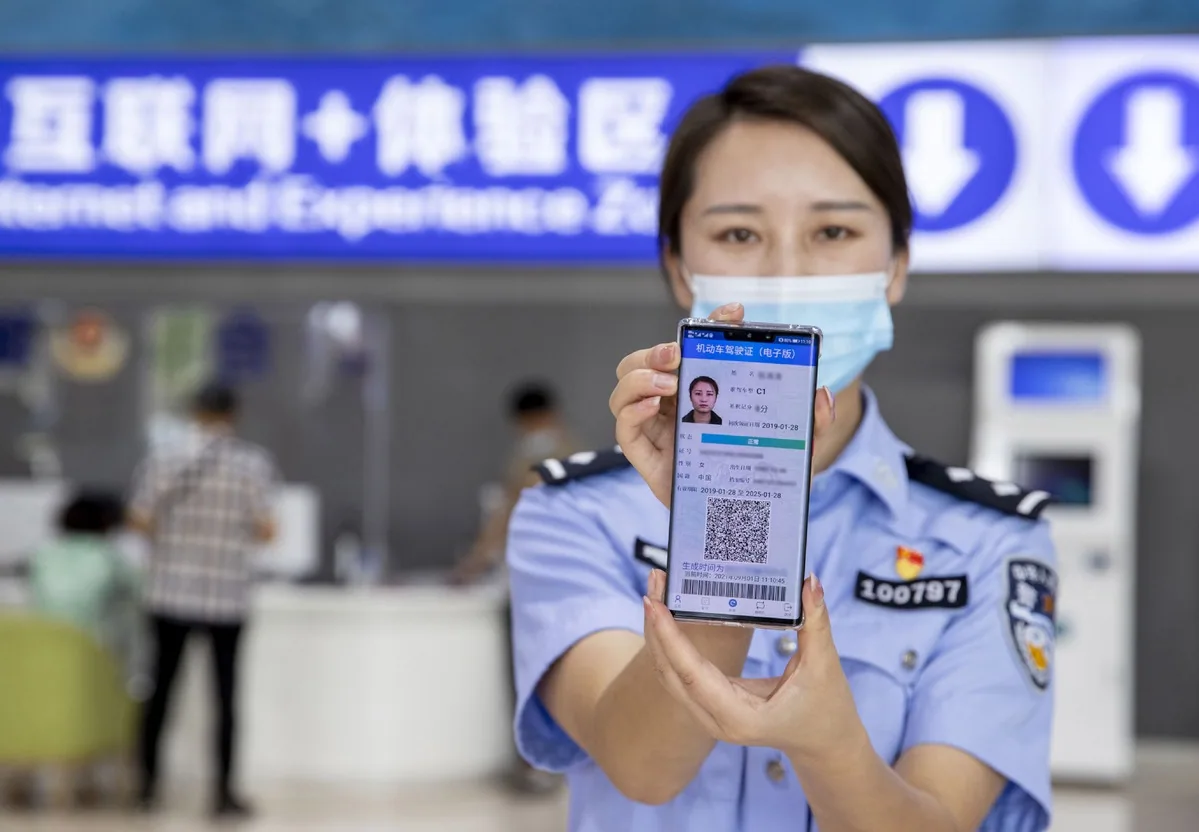
Why the permit in your glovebox does nothing
The international driving permit is a translation booklet backed by treaties the mainland is not party to in the relevant sense. Traffic police do not accept it, rental desks will not hand you keys against it, and driving on a foreign licence makes you an unlicensed driver in the eyes of the law — which is also the moment your insurer stops returning calls.
Two things catch people out. Hong Kong and Macau do recognise the permit, and both drive on the left — the booklet is useless only on this side of the border. It does not work in reverse either: a Shenzhen licence will not let you drive in Hong Kong, and the cross-border schemes that exist are narrow and quota-based, so start with the Shenzhen to Hong Kong page. Short-term visitors are a case apart — temporary permits exist in some circumstances; ask the vehicle administration office.
The conversion, end to end
You need to be a resident to convert: a valid residence permit with a reasonable stretch left on it, and a registered address. If you have not done the police registration, do that first — see residence registration. Offices here do ask for it.
The sequence is:
- Certified translation of your licence. It must come from an agency the vehicle administration office accepts — not one you did yourself. Ask the office which agencies they use.
- Medical check. At an approved clinic, and usually quick: eyesight, colour vision, hearing, basic limb mobility. The certificate has a limited validity — do it when you are ready to apply, not months ahead.
- Application. Through the 交管12123 app — the Ministry of Public Security's official platform, also on the web at gab.122.gov.cn — or in person at a vehicle administration office (车管所). Most people book in the app and hand the paper over at the counter.
- The theory exam. Subject 1 (科目一) only, in the usual case. A standard car class normally converts without a road test, but confirm that against the official source for the class you actually hold.
- Collection. Photographs are taken on site and the card is often issued the same day you pass. Check the expiry on it — for foreign holders it can be tied to your residence permit rather than the standard term.
Bring your passport, residence permit, registration form, the original licence, the translation, the medical certificate, and white-background photos — more than you think you need. Allow two to six weeks end to end; the paperwork is quick, and the variable is how long you take to study.
Treat all of that as the shape of the process rather than a fixed checklist. The documents demanded, the accepted translation agencies and the order of the steps are set by regulation and revised from time to time — confirm the current requirements with the official source, either the vehicle administration office itself or gab.122.gov.cn, before you pay for a translation or book a slot.
The 交管12123 app is Chinese-language and wants a mainland mobile number tied to your real-name registration before it will do anything useful. Sort the SIM card first, or you will get to the booking screen and stall.
The theory exam, and how to actually pass it
The exam is multiple-choice and true/false at a terminal, and it can be taken in English — other languages are offered too, though which ones varies by office. Everything else about it is a memory test.
Far more questions circulate than anyone could cram the night before, and they range across signage, right of way, penalties and points, alcohol limits, emergency handling and road markings. Several apps and websites publish the English set, and working through it is essentially the whole of the preparation. There is no shortcut, though the paper does have a consistent internal logic: it is written to reward the cautious, defensive choice, so where two answers both look defensible, the one that slows down, yields or calls the police is usually the behaviour the rules are trying to teach.
Be ready for the translation quality: the English is machine-adjacent in places and occasionally ambiguous. Learn the questions as shapes rather than sentences — you will recognise an item you have seen before even when the phrasing is odd. Do the full bank once, then re-do only what you got wrong. The pass threshold is high and the permitted retakes are set by regulation, so check both when you book rather than trusting a forum figure.
If your licence is not a plain car licence
The class you get follows the class you hold. A licence covering manual transmission normally converts to C1, which covers manual and automatic; an automatic-only licence converts to C2, which does not. If your country stopped issuing manual entitlements, accept C2 — the market here is drifting to automatic and electric anyway.
Beyond that it gets restrictive. Motorcycle entitlements are a separate class needing their own application and testing. Heavy classes — buses, trucks, articulated vehicles — are not a straight swap; expect extra examinations and conditions, and in some cases no conversion route at all. Provisional licences, and anything expired, are usually refused. Take the original to the vehicle administration office and ask before paying for anything.
Getting a plate is harder than getting the licence
The short version: a conventional petrol plate is rationed by lottery or auction and can take years; a new energy vehicle goes through a separate channel that skips the lottery. That single difference decides what most foreigners here end up driving—it is why I have been in EVs since the Tiguan went.
For the paperwork, budget for your passport, residence permit, proof of a Shenzhen address, the purchase invoice, compulsory traffic insurance and the vehicle purchase tax receipt, followed by the plate application and an inspection. Dealers handle most of this for you and it is worth letting them.
The eligibility rules for foreigners have moved repeatedly: an easing that dropped a two-year residency requirement for NEV applicants was written to run only until the end of 2025, and measures like it get extended, replaced or quietly allowed to lapse. Confirm the current position with the Shenzhen traffic police or the official vehicle quota service before you put money down on a car.
Shenzhen controls how many new cars are registered here. The pattern, held for years, is that petrol plates are rationed through a monthly lottery and a competitive auction, while new-energy vehicle plates are far easier to get — often applied for directly rather than won. It is the biggest single reason the roads look the way they do, and why so many first cars here are electric by default rather than by choice.
Eligibility usually needs a residence permit plus a qualifying run of local social-insurance contributions, and that period, the quota sizes and the application windows are all policy levers that get adjusted. Treat this as the shape of the system rather than the current rule, and confirm against the municipal government's own channels — the English portal at sz.gov.cn is where to start. The same goes for peak-hour restrictions on non-Shenzhen plates: they exist and they have changed.
ETC, parking, cameras and points
Once you are driving, four systems do most of the work.
- ETC. The windscreen tag that pays motorway tolls automatically, usually at a small discount on Guangdong routes. Banks commonly issue the device at no charge against a linked card, and Alipay handles sign-up in-app — terms differ by issuer, so check before you commit. Without one you queue in the manual lane.
- Parking. Roadside bays are paid through a municipal app rather than meters; mall car parks read your plate on the way in and bill automatically once you have linked it in WeChat or Alipay. Budget roughly ¥5–15 an hour, more in the CBDs.
- Cameras. Assume continuous recording — speed, lane discipline, phone use, seatbelts. Violations appear in 交管12123 and are paid there. They follow the licence, not the car, which is why you never take points on someone else's behalf; that is an offence in itself.
- Points. An annual points allowance sits against your licence; heavier violations cost more, and exhausting it means study and re-examination. Allowances and penalties are set nationally and revised periodically — check the current schedule on the official platform rather than what you memorised for the exam.
Buy, lease, or skip the car entirely
Buying is straightforward once you have a plate: dealers are used to foreign buyers, financing exists, and the domestic electric and range-extended models are competitive on equipment. Insurance is two parts — compulsory traffic-accident liability cover, and commercial cover on top, where the third-party limit is the number that matters. Take more of it than feels necessary. A realistic all-in premium for a family car is around ¥4,000–8,000 a year, depending on the car's value, your claims history and the limits you pick. Leasing usually sidesteps the plate question, because the car comes already registered, and it hands back the resale risk — which suits a fixed contract.
And the honest answer for most people: do not buy a car. Shenzhen has one of the best metro systems anywhere, DiDi is cheap, and parking where you probably want to live is a daily irritation — the metro guide and the rest of the living guide will get you further than a car will. A car earns its place if your children are at a school across the city, if you leave town at weekends for Dapeng, or if you run to the airport with luggage constantly — and even then, check the airport line first. I went years here without one and rarely noticed. The licence was still worth having.
Work with me