Last verified with Shenzhen Government source:
School is the first decision most families make about Shenzhen, and the one that quietly settles everything else — which district you live in, how long the morning run takes, how much of the package survives the year. It is also the decision with the worst information around it: most of what you find online is a school’s own prospectus or a forum thread from 2019. This is the orientation I give people before they start booking tours.
School location often decides where a family lives. Compare the best family neighborhoods in Shenzhen and the best Shenzhen areas to live before signing a lease; a workable school run usually matters more than a slightly cheaper flat.
Can Chinese-national children attend each school type?
Foreign families here choose between three systems, and the choice is partly made for you by nationality and paperwork rather than preference.
- International schools. Licensed specifically to teach the children of foreign nationals, taught fully in English, and generally requiring every enrolling child to hold a foreign passport — some also accept Hong Kong, Macau and Taiwan permit holders. Eligibility sits in each school’s licence rather than in its prospectus, and it is revised, so confirm your own family’s case with the admissions office in writing before you spend a morning on a tour. This is SIS, QSI, SAIS, Harrow, Merchiston and the rest of the names below.
- Bilingual and private schools. Chinese-owned schools running an international stream, usually a mixed Mandarin and English timetable with an IGCSE, A Level or AP pathway in the senior years. They accept mainland passport holders, which international schools generally cannot, so they are the obvious answer for mixed-nationality families. Fees are often lower and quality varies enormously — visit, do not assume.
- The public system. Free or close to it, taught entirely in Mandarin, and allocated by a district points system weighing household registration (hukou), residence permits, whether you own or rent, how long your tenancy has been registered, and social insurance history. Children without local hukou sit lower in the queue by design. Foreign children can attend in some circumstances, but rules are set district by district and revised most years — treat this as the general shape and confirm your own case with your district education bureau, via sz.gov.cn.
Which Shenzhen schools offer IB, AP or A Levels?
Shenzhen covers four broad curricula, and several schools run more than one. IB — PYP, MYP and DP at SWIS and ISNS; PYP and DP at SIS, whose middle-school page describes MYP candidate status; and the Diploma at QSI. SAIS lists the Primary Years Programme. American with AP — BASIS most intensively, with QSI and SAIS also offering AP. British — IGCSE at sixteen, then A Levels, at Harrow and Merchiston. Canadian — ISNS again, which holds New Brunswick accreditation on top of the IB and can send a student home with both diplomas.
Choose for the exit, not the entrance. If the posting is two or three years and you are going home afterwards, matching your home system matters more than any campus; if your child will finish here at eighteen, the IB Diploma and A Levels travel most easily. Then Mandarin: an hour a day in a foreign-language stream is a very different thing from a genuinely bilingual timetable, so ask how many hours, in what group, to what exit level. Then the uncomfortable one — learning support and English-as-additional-language provision is thin across the city by the standards most families are used to. Ask directly, early, in writing.
Which international schools are in Shekou?
SIS, QSI, SAIS and BASIS cluster in Shekou. SWIS is by Shenzhen Bay, while ISNS is farther north in Xili / Taoyuan. That is the single biggest reason Shekou has stayed the most international corner of the city, and why rents there hold up; Nanshan more broadly gives the same access with more housing choice.
The newer campuses sit outside it. Harrow is in Qianhai, on reclaimed land still filling in around it. Merchiston is up in Dalang, Longhua — far from the coast, but it boards and the housing is much cheaper. Futian has bilingual and international options of its own and the shortest crossing to Hong Kong, which matters if one parent works there.
School buses run and are well organised, but read the timetable honestly: a fifty-minute each-way ride starting at seven is a real cost to a six-year-old. Secure the school place first and sign the lease second, even if that means a serviced apartment for a month — the mechanics are in my guide to renting an apartment.
How much do international schools in Shenzhen cost?
In the official 2026–27 schedules currently accessible here, annual tuition runs from ¥140,400 at QSI to ¥372,900 at Harrow, with secondary years generally costing more than primary. Where a current official schedule could not be verified, the database says “Ask admissions” rather than filling the gap with a third-party estimate. The school’s own written fee sheet is the only number to sign against.
What costs are excluded from tuition?
The costs that surprise people. Application fees of around ¥1,500–2,500, non-refundable and per child. A one-time enrolment or capital levy at many schools, sometimes substantial, sometimes partly refundable. A deposit against the place. And the annual extras — bus, lunches, uniform, trips, exam entry, devices — which add ¥20,000–50,000 without much effort.
If an employer is paying, read the education allowance clause before you shortlist. Allowances are often capped below the top of that range, and often exclude the levy and the bus. The gap is yours.
Deposits and first-term fees usually fall due months before term starts — often before you have signed a lease or been paid locally. Get the payment schedule in writing at the application stage, and check whether the school accepts an overseas transfer or expects a mainland account.
When should families apply?
For an August start, work backwards from the previous autumn: nine to twelve months ahead is comfortable, six workable, six weeks a scramble. The pressure points are the entry years — reception and Year 1, the start of middle school, the year before the Diploma or A Levels — which fill first and hold the longest waitlists. Mid-year entry happens constantly, because families rotate out constantly, but you take what is free.
Assessment is usually an English screening, a maths paper and an interview with child and parents; for the youngest years, observed play. Have documents ready first: passports and residence permits, two years of school reports, immunisation records, a birth certificate. Some schools want Chinese translations, some want them certified — ask which, because it takes longer than you expect.
What to ask on the tour
Admissions tours are a sales process, run on a route chosen to look good. Go on a normal school day, and ask these six. The longer, school-by-school version of this list lives in the comparison guide.
- How many teachers left at the end of last year, and the year before? Turnover tells you the most and is volunteered the least.
- What is the class size cap, and the actual average in my child’s year group right now?
- Show me the full spread of Diploma or A Level results, not the top ones — and where the last three years’ leavers actually went.
- What learning support and English-as-additional-language provision exists, who delivers it, and is it charged separately?
- What does the capital levy pay for, and when is it refunded?
- What is the door-to-door bus time from the neighbourhoods I am considering?
Then ask to speak to a parent the admissions office did not select for you. A school that finds this awkward has told you something useful.
School guides · 学校指南
Also worth your shortlist
The other established international schools in the city. Use the official-source database for current tuition evidence and confirm the complete written fee schedule with admissions.
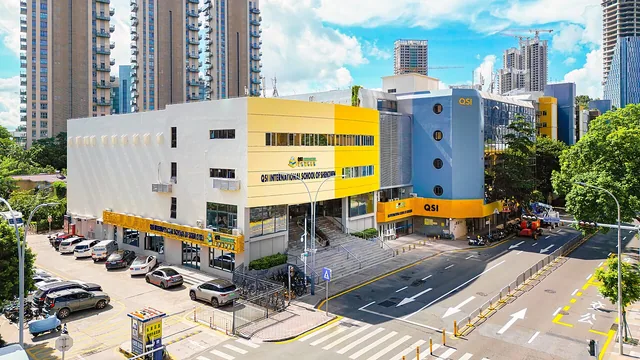 QSI International School of Shenzhen
Runs a mastery-based curriculum: a child moves up when a unit is genuinely mastered rather than when the calendar says so. In the secondary school that feeds two routes rather than one — a wide slate of AP courses, and the full IB Diploma Programme with Theory of Knowledge, the Extended Essay and CAS, so a family can choose the pathway rather than the school choosing it for them, which makes the reports read very differently from grades. Ask to see one before you decide. Long established in Shekou.
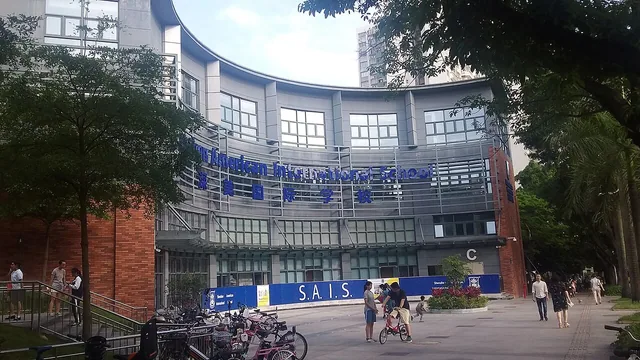 Shenzhen American International School (SAIS)
An IB World School beside Sihai Park, teaching inquiry-led classes from the early years through to the end of high school, with AP courses in the senior grades; its IB authorisation is for the Primary Years Programme only.
- Shen Wai International School (SWIS)
SWIS’s official learning section lists all three International Baccalaureate stages: Primary Years, Middle Years and Diploma programmes.
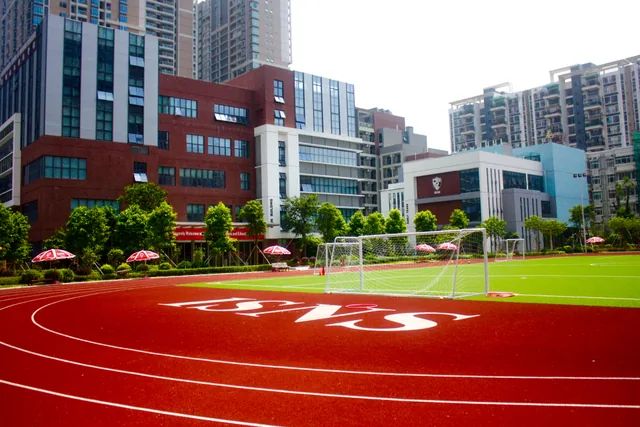 International School of Nanshan Shenzhen (ISNS)
A full IB continuum school — Primary Years, Middle Years and Diploma — that is also accredited by the New Brunswick Department of Education, so students can finish with both the IB Diploma and a New Brunswick high school diploma. Mandarin is carried seriously the whole way rather than bolted on. Its campus is in Xili / Taoyuan, not in Shekou.
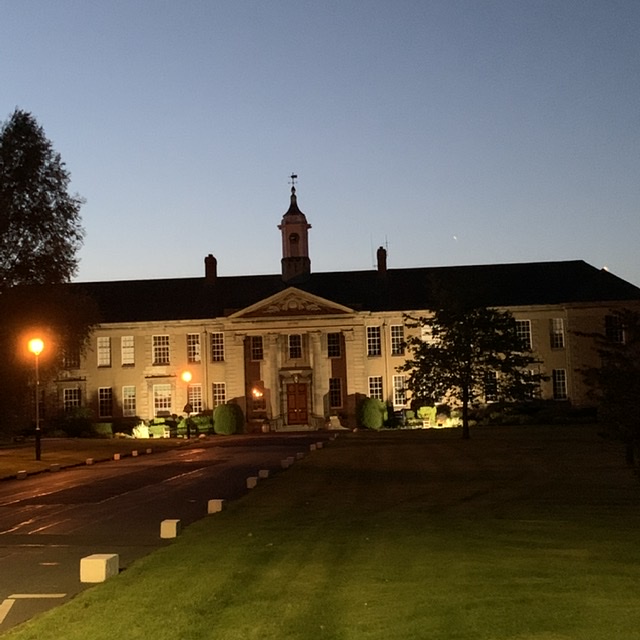 Merchiston International School
A day-and-boarding school set up as the overseas sibling of a long-established Edinburgh school. Boarding is usually the reason families look this far north, and it is charged on top of tuition — ask for the combined figure, not the tuition line.