Last verified with Shenzhen Government source:
I have lived here since 2018 without owning a car, and I have wanted one perhaps four times — all of them involving furniture. The metro reaches nearly everywhere I go, a phone and a bicycle cover the gaps, and this page is really about the handful of trips where that stops being true.
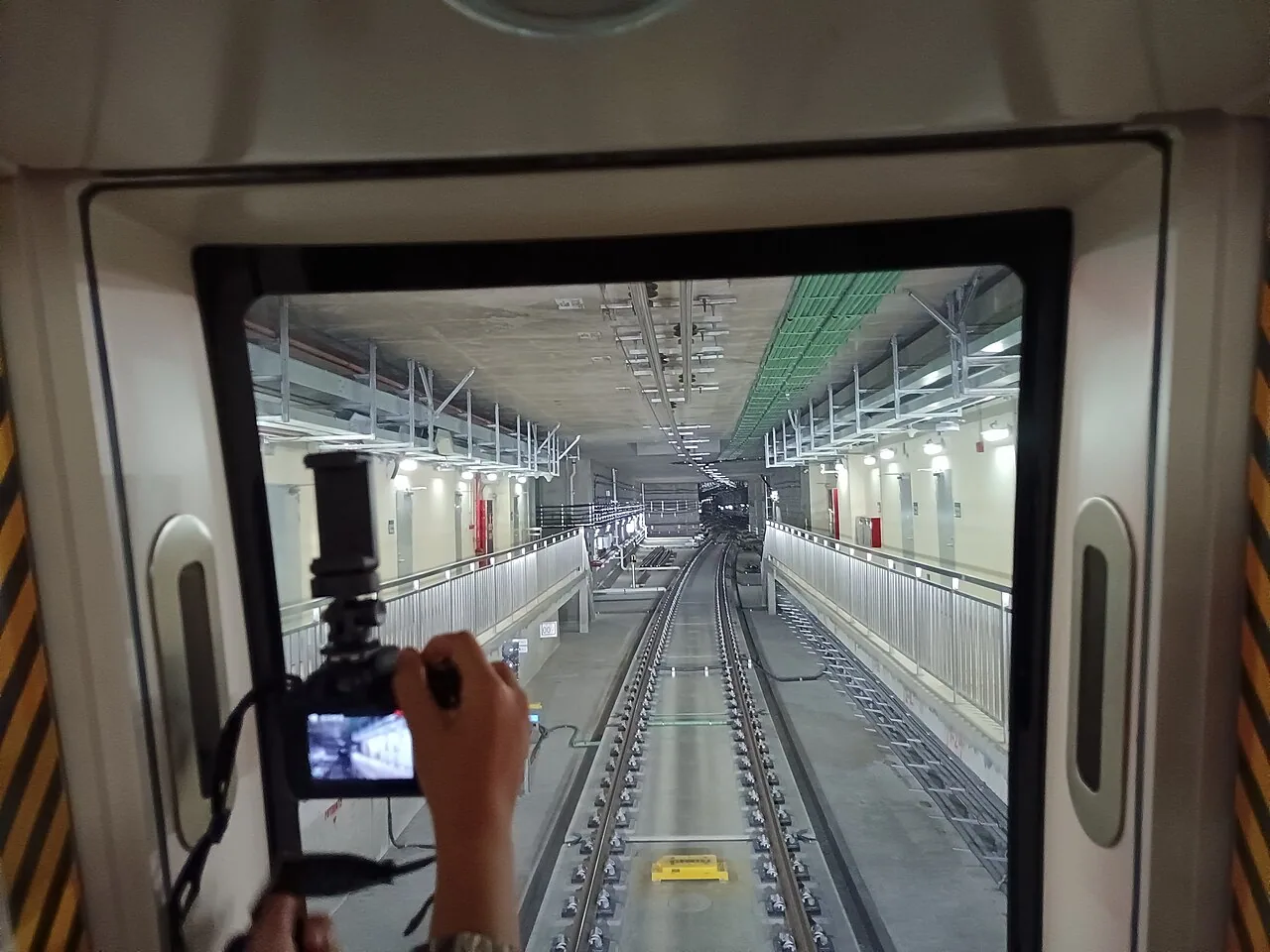
Start with the metro, and mostly stop there
Shenzhen grew up after the metro was a solved problem, so the network feels less bolted on than arranged around. More than a dozen lines, several hundred kilometres of track, and still opening more — the Line 13 northern extension came into service in June 2026 and pushed the western flank up towards Guangming. In the built-up districts there is almost always a station within a ten-minute walk.
Fares are distance-based, starting at around ¥2 for a short hop; most trips inside the central districts land between ¥3 and ¥6. Trains run roughly from 6:30am to about 11pm, but the last-train time varies by line and by station and is posted at the gate line rather than being one number for the whole system — treat the board and the app as the authority, and confirm anything that matters against the Shenzhen government's own English portal. You pay by QR code from WeChat or Alipay, or with a Shenzhen Tong card. Every entry has a security screen, so add three or four minutes at a big interchange. The mechanics are in the metro guide.
Crossing to Hong Kong
There is no best crossing, only a best crossing for your particular trip — and picking wrong costs you an hour.
- Futian Checkpoint (福田口岸) — the walking one, at the southern end of Lines 4 and 10. You emerge at Lok Ma Chau Spur Line and pick up the East Rail Line. Fastest option if you are already in Futian and heading for the New Territories or Kowloon by rail.
- Futian high-speed rail station (福田站) — Hong Kong West Kowloon in roughly fifteen minutes, with mainland exit and Hong Kong entry formalities completed after arrival at West Kowloon. The one to use with luggage, or when you want to land in the middle of Kowloon. MTR arrival process
- Shenzhen Bay (深圳湾口岸) — the vehicle crossing, with both sides' controls in one building. This is the one for a cross-border coach or a hired car, and usually the sensible choice for Hong Kong Island, Tuen Mun or Hong Kong International Airport.
- Luohu (罗湖口岸) — the oldest and busiest, straight onto the East Rail Line at Lo Wu. Convenient if you live in Luohu, grim at peak hours and on public holidays.
- Huanggang (皇岗口岸) — connects to Hong Kong’s Lok Ma Chau road control point, which provides 24-hour passenger clearance. Use the cross-boundary shuttle or a cross-boundary coach; this is separate from the Futian/Lok Ma Chau Spur Line rail crossing. Check current arrangements before travelling. Hong Kong Immigration control points
Whether you need a visa or a permit, and how many entries it allows, depends entirely on your nationality and your mainland status — and those rules move. Check with the Hong Kong Immigration Department and the Shenzhen authorities before you buy anything. The Hong Kong crossing guide takes each checkpoint in turn.
The airport, its metro line and the ferries
Shenzhen Bao'an International (SZX) sits on the coast in the north-west of the city. Metro Line 11 is the fast way there — Futian to the airport in around 35 minutes — and the trap to memorise is the station name. You want Airport (机场) on Line 11, not Airport East (机场东) on Line 1, which is a different place and a much slower ride. Line 11 also runs a paid business carriage at the front with wider seats and luggage space; it costs several times the standard fare and, with two suitcases at seven in the evening, I think it earns it.
A taxi from the central districts is normally a three-figure fare and about forty minutes with clear roads — fine at 6am, a gamble at 6pm. Ferries are the underused option: services run from the terminal beside the airport and from Shekou, linking Hong Kong, Macau and Zhuhai, and the Hong Kong airport route in particular can let you transfer without formally entering Hong Kong. These routes have been suspended and restored more than once, so check the operator's own site the week you travel rather than trusting any schedule you read elsewhere — mine included. More in the airport guide.
DiDi, taxis and driving yourself
DiDi is the default car — a WeChat mini-programme or a standalone app, the international version with a workable English interface. The problem worth knowing about before it happens to you is the pickup pin. At a mall, a hotel or an office tower it drops on the middle of the building, and the driver ends up at a loading bay or a car-park ramp on the far side while you stand at the front door. Choose one of the numbered pickup points the app offers rather than dragging the pin yourself, and at multi-tower complexes send the driver the exit letter or gate number in the chat.
Taxis still beat DiDi in three situations: at airport and railway ranks, where the queue is organised and moves; in heavy rain, when surge pricing makes the app expensive; and late at night. Use licensed metered taxis and the posted tariff rather than old taxi-colour rules. The city’s published tariff sets the starting fare at ¥10 for the first 2 km; waiting, distance, time-of-day and other surcharges can increase the total. Shenzhen taxi tariff notice
If you want to drive yourself, the short version is that an international driving permit is not a substitute for a Chinese licence once you are actually living here — the route is a conversion, involving a theory test, a medical and a stack of paperwork. It is more tedious than difficult. Which documents are demanded, which categories convert directly and what short-term arrangements exist for visitors all get revised from time to time, so confirm the current requirements with the official source before you book anything; the Shenzhen government portal is the place to start. The process as I went through it is in the driving licence guide.
The last kilometre, and buses
Shared bikes — Meituan, HelloBike and Qingju are the three you will see — cover the gap between the station exit and the door. Scan, ride, expect a small per-half-hour charge. The rule that catches people is the return area: you have to end the ride inside a marked parking box, painted white lines with a sign, and outside one the app will either refuse to close the ride or add a dispatch fee. Near metro exits the box is usually thirty seconds away; in a residential compound it may not be, so look before you commit to the last kilometre.
Buses are cheap, air-conditioned, comprehensive and slow — I use them only where the metro does not go, and only with the route open in Amap.
Exit numbers are the real addresses here. Stations are enormous, and naming one can still mean a fifteen-minute walk underground if you surface at the wrong end. Save the exit letter with the destination — Exit D, not just the station name — and tell it to whoever is meeting you.
Leaving the city by rail
Three main stations, and confusing them is the most expensive mistake on this page.
- Futian (福田站) — underground in the CBD, on Lines 2, 3 and 11. Hong Kong West Kowloon southbound, Guangzhou and the national network northbound.
- Shenzhen North (深圳北站) — in Longhua, the biggest of the three and the one that handles most long-distance services. Lines 4, 5 and 6.
- Shenzhen (深圳站) — in Luohu, beside the border crossing, and largely the older Guangzhou–Shenzhen intercity trains rather than the high-speed network.
A fourth, Shenzhen East at Buji, adds to the confusion. Read the station name on the ticket before you order the car: Futian to Shenzhen North is over half an hour on the metro, and people miss trains over this every week.
For the rest of the delta — Guangzhou is under an hour from Futian or Shenzhen North, frequently enough that you can turn up and buy. Dongguan is closer still, served by Humen and Dongguan stations. Zhuhai and Macau give you a real choice: the ferry from Shekou, rail via Guangzhou, or a coach over the Shenzhen–Zhongshan Link, the bridge-and-tunnel crossing of the Pearl River estuary that opened in 2024 and cut the western drive from a couple of hours to well under one. Which is fastest depends on where you start, so compare all three rather than defaulting to the train.
Work with me