Last verified with Shenzhen Government source:
The northern extension of Metro Line 13 opened to passengers on 28 June 2026. The numbers are modest by Shenzhen standards — eleven stations, roughly nineteen kilometres — but the effect is not. You can now sit on one train from the Hong Kong border at Shenzhen Bay to Guangming, and a district most people on the coast had quietly filed under “someday” has become a normal Saturday.
What opened
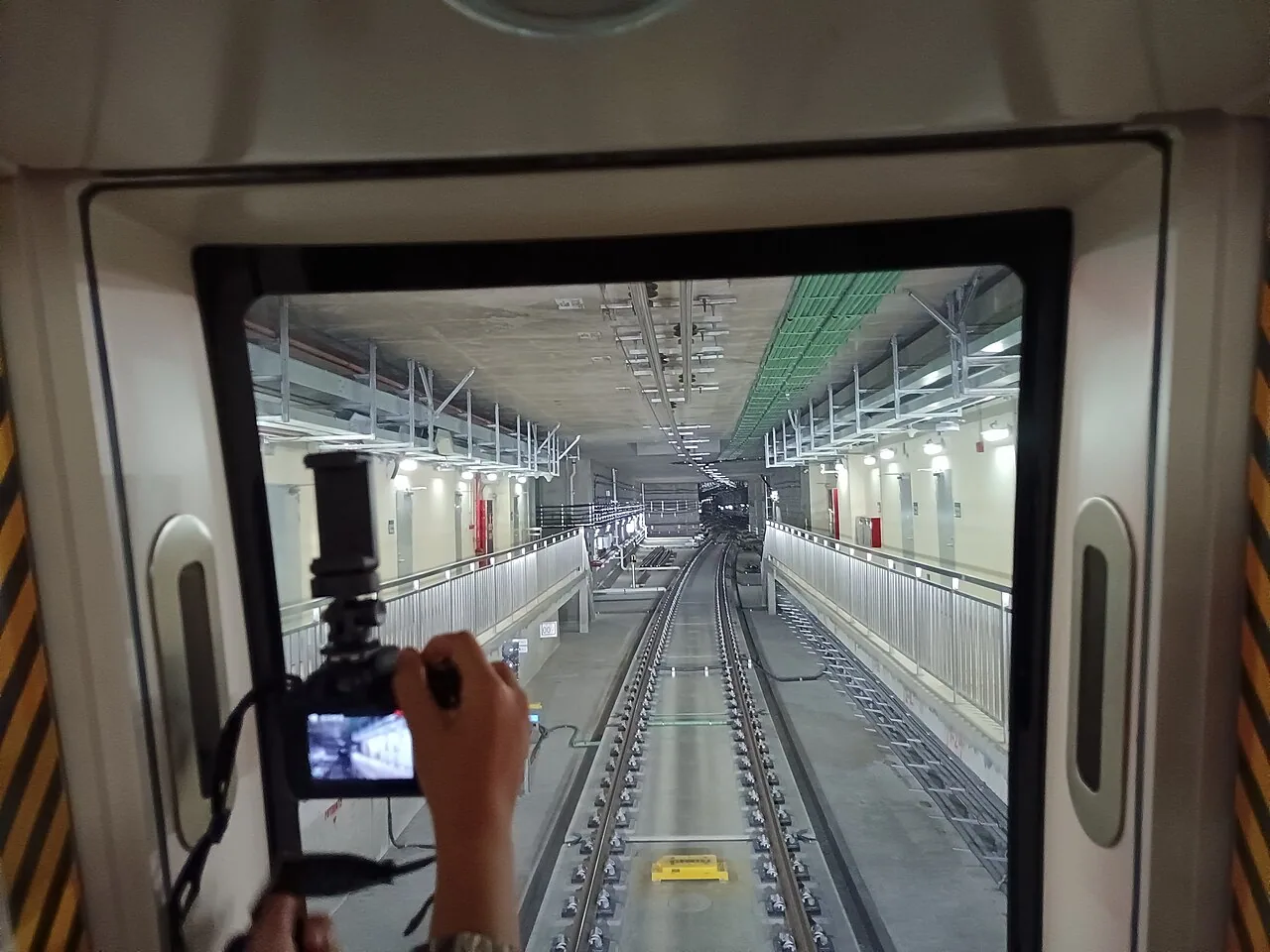
The new track begins at Shangwu, where Line 13 previously ended, and runs north to Lisonglang in Guangming. Eleven stations, about nineteen kilometres — 19.25 km on the city’s own figure — opened on 28 June, announced in a Shenzhen Government Online notice and reported by Railway Gazette.
The southern half of the line was already carrying people: Shenzhen Bay Checkpoint at the bottom, then up through Nanshan’s tech belt to Hi-Tech Central and on to Shangwu. The extension simply bolts onto the top of that. What you get as a result is a single north–south spine down the western side of the city, touching Nanshan, Bao’an and Guangming, with a border crossing at one end.
Shenzhen has no shortage of metro. What it has had rather less of is a line that runs the full length of the west without making you change trains halfway.
Why the one-ride part matters
Distance is not what makes a Shenzhen commute unbearable. Transfers are. A forty-minute ride you sleep through is tolerable five days a week; a thirty-five-minute ride with two changes, two sets of stairs and two platform crowds is not, and people quit those jobs or move house within the year.
That is the real content of this opening. The kilometres between the coast and Guangming have not moved. The friction between them has.
Who it changes things for
- Cross-border commuters. Shenzhen Bay Checkpoint sits at the southern terminus, so the whole western corridor is now one ride from the crossing — useful if you work in Hong Kong and want your rent to stop hurting. The train is the easy part; crossing hours, permit types and what a given visa lets you do change more often than the timetable does, so confirm your own situation with the official source rather than with a colleague who crossed last year.
- People priced out of Nanshan. The tech corridor is on this line. Living north of it and riding in is now a straightforward proposition rather than a heroic one.
- Bao’an residents heading south. The line adds a second, more direct route towards Nanshan and the Bay for anyone who had been leaning on Line 1 or Line 11.
- Weekend traffic going the other way. Which is the part I think people are underrating.
What is now within reach in Guangming
The obvious draw is the Shenzhen International Museum of Art, which opened at the end of May 2026 — two hull-shaped halls, somewhere around 135,000 square metres, and a genuinely serious opening programme rather than the usual civic filler. Published hours are Tuesday to Sunday, 10:00–18:00, closed Mondays. Ticketing is tiered rather than flat: basic entry is cheap, an all-access pass covering the full run of exhibitions is listed at around ¥120, and discounted bundles come and go with the programme. Treat all of that as the position at the time of writing.
One caveat worth reading twice: the access the city publishes for the museum is Guangming Station, Exit D, on Line 6 or the spur line — not the Line 13 terminus at Lisonglang. Line 13 gets you into the district; you will still change to reach the door. Check the interchange on the day rather than assuming. The city’s opening announcement is the reference for what the museum is and what is in it; for hours, tickets and closures the museum’s own booking channel is the only thing that stays current, and it is what you should confirm against before you set off.
Most major museums here run free timed entry through a WeChat mini-programme, and weekend slots go early. Assume you need a reservation, book it a day or two ahead, and bring the passport you booked under — the name has to match at the gate.
The other half of Guangming’s pitch is the science city (光明科学城), the cluster of state research facilities and university campuses that explains why the district is being built out at the pace it is. It is a workplace rather than a day out, but it is the reason the housing, the schools and the transport are arriving in that order. If you are weighing the northern districts at all, it is context you want.
What it does — and doesn’t do — to the rent question
The pattern I have watched repeat along every new line here: asking prices near the new stations move first, signed leases move later, and the gap between the two is where agents live. Expect to be told, warmly and often, that a flat is “on the new Line 13”. Ask how far the walk actually is.
Rent still falls as you go north and west, and this extension does not change that arithmetic so much as make the cheaper end of it liveable. Whether that trade works for you depends on numbers only you have. My advice is unromantic:
- Ride the exact commute at the exact hour before you commit. Not at 11am on a Sunday. At 08:10 on a Tuesday, both directions.
- Eleven stations over nineteen kilometres is respectable spacing, but this is still a metro, not an express. The city puts downtown Guangming to the Nanshan CBD at roughly forty-five minutes; running the whole spine down to the checkpoint is longer again. Time your own version of the trip rather than the headline one.
- Count the walk at both ends. Twelve minutes from the station in August is not the same twelve minutes it was on your viewing day in March.
- Compare against what a similar budget buys you in Longhua or the middle of Bao’an, which have their own lines and are not new news.
Lease terms in the northern districts are the same everywhere else in Shenzhen — typically one month’s deposit plus one or three months’ rent up front, with agency fee negotiable. The renting guide covers the contract, the registration and the parts that go wrong.
Riding it
Nothing special is required. The extension uses the same fare and gate system as the rest of the network.
- Payment. The metro QR code (乘车码) inside WeChat or Alipay is the path of least resistance, and works from your first day once the wallet is set up — see setting up WeChat Pay and Alipay. A Shenzhen Tong card (深圳通) is the fallback if your wallet ever sulks.
- Fares. Distance-based, starting at ¥2 for a short hop. A long run up the western spine lands in the low teens rather than anywhere alarming, and the exact amount is worked out at the gate when you leave.
- Hours. Broadly from around 06:30 to roughly 23:00, but first and last trains differ by station and by direction. The boards on the platform are authoritative; a blog post is not.
- Security. Bag scan at every entrance, and liquids are sometimes tested. Add five minutes at the busy stations.
If any of that is unfamiliar, start with the Shenzhen Metro guide rather than working it out at a gate with a queue behind you.
Before you plan around it
Two honest caveats. First, opening timetables get revised — service intervals on a new extension usually tighten over the following months, so the headway you experience in August may not be the one that settles. Second, station-level details such as exit numbering and interchange routing are frequently adjusted after opening; confirm on the operator’s own signage or sz.gov.cn rather than on a map app that has not caught up.
Third, and least discussed: this line is not finished. A further southern section running on past the checkpoint towards Dongjiaotou is still under construction, and the opening being talked about for it is 2027. That is a direction of travel, not a date to sign a lease against — published rail timelines here move, and they usually move later rather than earlier. If your plan depends on that section existing, wait until it does.
Beyond that: it is a metro line, and it goes where it says it goes. That is more than can be said for most infrastructure news.
If you are actually weighing a move north off the back of this — comparing districts, riding the commutes, reading a lease you cannot read — that is the kind of day I do for a living. Relocation days start at around ¥1,500.
Work with me