Last verified:
Most people’s first hour in mainland China happens in Luohu, and most never come back. You get off the train at Lo Wu, walk the covered bridge, and twenty minutes later you are on Line 1 heading west to somewhere newer. But Luohu was built first, and it is the only district here that behaves like an ordinary Chinese city rather than a masterplan.
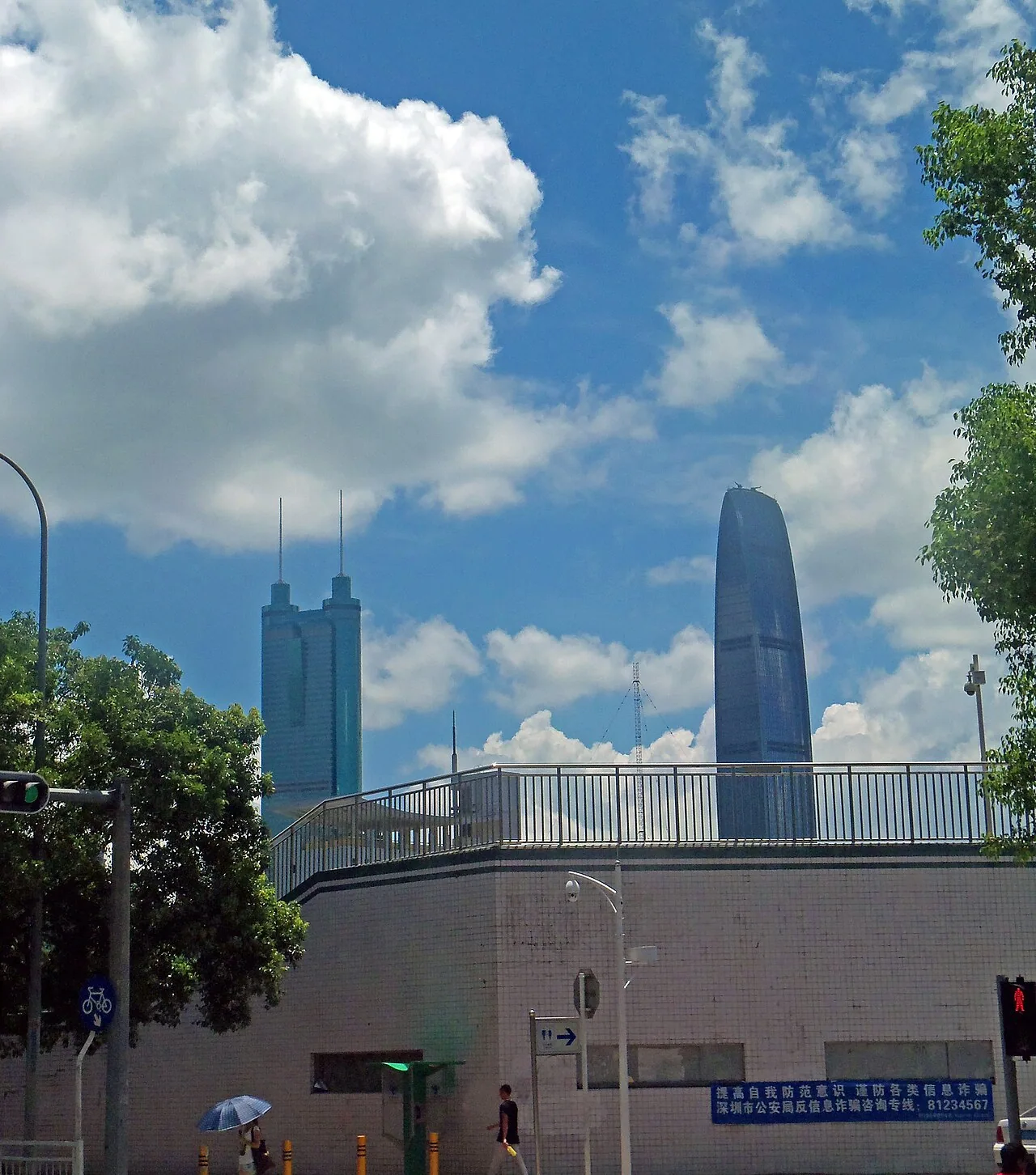
What Luohu is, and how it feels
Luohu (罗湖) was the first piece of the Special Economic Zone to go up after 1980, for the obvious reason that it is the piece touching Hong Kong. The International Trade Centre on Renmin South Road, finished in 1985, is where “Shenzhen speed” (深圳速度) comes from — a floor every three days. It still stands, still works, and looks its age.
That is the district in one building. Luohu got old first: small blocks, crowded pavements, mature street trees, housing stock mostly from the 1980s and 1990s. Nothing here was planned the way Qianhai or Bao’an Center were — it accreted. What you get in return is street life. In Futian you go to a mall; in Luohu you go downstairs.
The border, and the station beside it
Luohu Port (罗湖口岸) is the classic crossing and still the most useful for many people: it puts you straight onto Hong Kong’s East Rail Line at Lo Wu, roughly 35 minutes from Kowloon Tong and, since the cross-harbour extension, through to Admiralty without changing. The port, Shenzhen Railway Station (深圳站) and the Line 1 terminus share one complex, so you are on the metro minutes after clearing immigration.
Bring the passport itself, not a photo of it. Queues build on weekday mornings southbound and on Sunday evenings northbound, and public holidays are worse again. Residence-permit holders can sometimes register for self-service e-channel clearance, but eligibility rules, required documents and desk hours differ by port and get changed without much notice — confirm with the official source, or at the registration counter itself, before you plan around it.
Hours at Shenzhen’s land crossings have been adjusted several times in recent years, and Luohu has had renovation work. Confirm current hours with the official source — sz.gov.cn — before you travel, and keep Futian Port in mind as the nearby fallback. Do not plan around the rebuilt Huanggang port: it has not opened to the public and no opening date has been announced.
The places worth your time
KK100 and the old skyline
KK100 (京基100) is the 441-metre tower in every photograph of the district, finished in 2011 and the tallest building in the city until Ping An Finance Centre passed it. The St. Regis has the upper floors and its lobby on the 96th; forget observation tickets and buy a drink up there instead — same view, better chair. The site was the urban village of Caiwuwei before redevelopment. Nearby, Shun Hing Square (地王大厦) held the record first, and its 69th-floor Meridian View Centre deck is cheaper and emptier. Grand Theater station on Lines 1 and 2 serves both; the hotels page covers staying up there.
Dongmen
Dongmen (东门) is the old market quarter: pedestrianised streets north of Shennan Road East, department stores, clothing stalls, phone accessories, tailors, snack lanes. Laojie station (老街) on Lines 1 and 3 drops you in the middle. Go on a weekday morning; weekend afternoons are shoulder to shoulder. Prices are negotiable almost everywhere, and the opening quote to an obvious foreigner sits a long way above what the seller will actually accept — counter low, be pleasant, be ready to walk. Counterfeits are common near the port.
Hubei old village
Hubei (湖贝) is the Zhang clan village Shenzhen grew around: an ancestral hall and a grid of lanes older than everything else here by centuries. Its redevelopment has been genuinely contested — from 2016 architects and residents argued in public for keeping the old core, and the approved scheme retains part of it while towers rise around the rest. Go and look; it changes every few months.
Parks, malls and gold
Luohu is greener than its reputation, and its parks are free and properly used rather than decorative. Honghu Park (洪湖公园) in the north is the one to time: the lotus ponds flower in early summer and half the district turns up with a camera. Renmin Park (人民公园) keeps a rose garden and the ballroom dancing that starts at seven in the morning. Donghu Park (东湖公园) runs up against Shenzhen Reservoir on the eastern side. Further east again the district holds Wutong Mountain (梧桐山), the highest point in Shenzhen at just under a thousand metres, and Fairy Lake Botanical Garden (仙湖植物园). Both have used free timed-entry booking through a WeChat mini-programme at busy periods, so check the current arrangement before you set off rather than turning up and hoping.
The MixC (万象城) on Bao’an South Road was the original one, opened in 2004 and still the reason Futian residents come east. Shuibei (水贝), north of the centre on Line 3, is one of China’s largest gold and jewellery trading clusters: floors of wholesale counters that price off the day’s gold rate plus a workmanship charge rather than off a retail markup. Ask for the certificate and the per-gram breakdown before you pay for anything.
Living there: rent, buildings, who it suits
Rents are the lowest of any central district, which is why most people move here. As a broad estimate — it varies with the building, the floor and whether anyone has renovated since 2010 — an urban-village room runs around ¥1,500–2,500 a month, a one-bedroom in an older block ¥2,800–4,500, a two-bedroom ¥4,500–7,500, and a newer serviced flat near the MixC from about ¥9,000. Bands to negotiate from, not quotes.
The reason it is cheaper sits in the buildings. The Chinese shorthand is 老破小 — old, shabby, small — and it is not affectionate. Before you sign, check whether there is a lift at all (six-storey walk-ups are common, and cheap for a reason), water pressure on the upper floors, piped gas or bottles, which way the windows face, and what the management fee covers. Parking is scarce and charged separately. The renting guide covers contracts.
One local wrinkle worth understanding before you sign anything. Some tired-looking Luohu blocks let and sell well above what the building itself justifies, because they fall inside the catchment of an older, well-regarded primary school. If you have no school-age children you are paying for something you will never use, and walking a few streets usually gets you the same flat for less. If you do have them, do not take the agent’s word for the catchment: boundaries get redrawn, and the only version that counts is the list the district education bureau publishes itself.
Luohu suits you if you cross to Hong Kong often, want your money to go further, or would rather have street life than a landscaped podium. It does not suit you if you want a new building with a gym downstairs, international schools close by, or a large English-speaking social circle — Shekou and Nanshan are better for that.
Getting around
Six metro lines touch the district, which is the strongest practical argument for living here. Line 1 runs west along Shennan Road to Futian, Nanshan and the airport, and terminates at Luohu inside the port complex. Line 2 crosses the top of the city and drops down into Shekou. Line 3 heads north-east towards Longgang via Laojie, Cuizhu and Shuibei. Line 5, the ring, covers the eastern edge and the Buji direction. Line 7 ends at Tai’an. Line 9 starts at Wenjin, picks up Renmin South, and runs west under Futian towards Xiangmihu.
Fares start at ¥2 and rise with distance, paid with a QR code from WeChat or Alipay — see the metro guide and the WeChat and Alipay walkthrough. Shennan Road East is slow at almost any hour, and Luohu is one of the few districts where walking beats a car. From the port, use the marked pick-up area and save the exact gate; the complex has several and drivers will not guess.
Eating and drinking
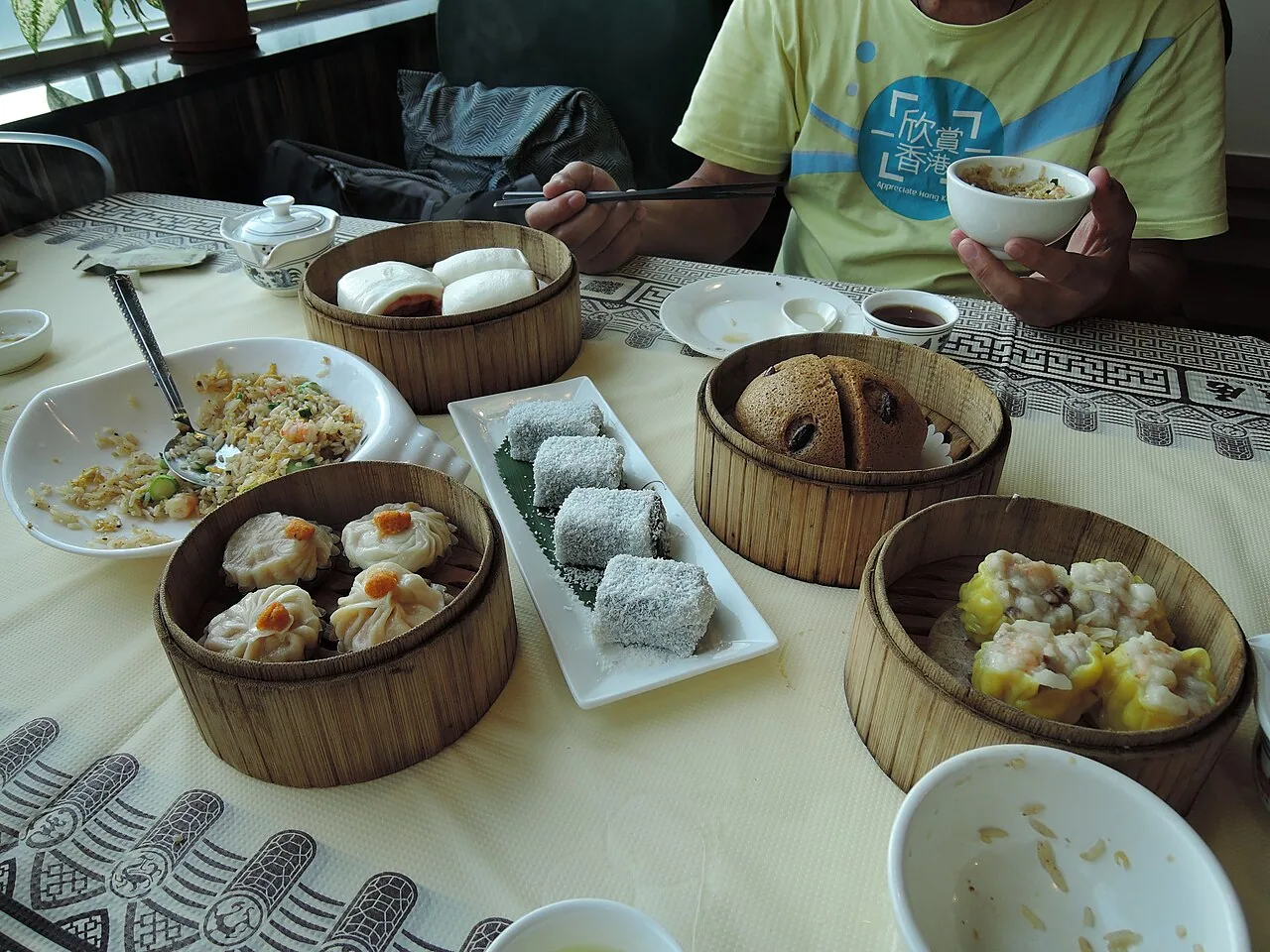
Luohu is where Shenzhen’s older Cantonese restaurant tradition is strongest, and the thing to do about it is morning tea (早茶). The old-style rooms open around seven and serve into the early afternoon: char siu, rice rolls (肠粉), steamed spare ribs, egg tarts, tea that keeps coming. Names come and go, and I would rather not send you to one that closed last year — but the busier the room at eight on a Sunday, the better it will be.
Beyond that the strength is Chaozhou cooking — beef hotpot sliced to order, marinated goose, oyster omelette — plus cheap Hunan and Sichuan places around the station. Budget roughly ¥30–60 a head at a neighbourhood restaurant and ¥100–200 for a proper sit-down Cantonese lunch — rough bands to plan around, not menu prices; the restaurants page has picks. On drinking, be realistic: Luohu is not a bar district. For a real night out you will end up in Futian or Shekou.
Most Cantonese restaurants add tea money (茶位费), a per-person charge of roughly ¥5–15 covering tea and pickles. It appears on the bill, it is entirely normal, and it is not someone taking advantage of you.
Where you would actually go if someone is ill
Luohu is unusually well served, and the reason matters: it is the old centre, so the city’s oldest hospitals are here rather than out where the new towers are.
Shenzhen People’s Hospital 深圳市人民医院 — tertiary Grade-A, founded 1946, and by the municipal government’s own description the oldest and largest hospital in the city. Line 3 to Cuizhu, Exit D. It opened an International Medical Department in January 2026 with its own outpatient, inpatient and imaging pathway for foreign residents. Read the language cover honestly, though: it is staffed by a volunteer rota of multilingual medical staff, not a guaranteed interpreter at every appointment, and it is a scheduled-care pathway rather than the night A&E. Email or ring the department first.
Luohu District People’s Hospital 罗湖区人民医院 — tertiary Grade-A, three campuses all inside the district. It is the closest tertiary hospital to Luohu Port and Wenjindu — roughly a kilometre on foot or one metro stop — which is the fact worth knowing if you cross to Hong Kong daily.
Luohu District Hospital of Traditional Chinese Medicine 上海中医药大学深圳医院 — tertiary Grade-A, with a general remit rather than a narrow one. If you rent in Liantang or the eastern end of the district this is the tertiary hospital you can walk to, and knowing that in advance is the point.
One correction worth carrying, because the assumption is common: the University of Hong Kong–Shenzhen Hospital is not in Luohu. It is in Futian. How healthcare works here, in full.
So who is it for?
Luohu suits you if you cross to Hong Kong often enough that ten minutes to the port changes your week, if you would rather pay Longhua rents for a central address, or if you like a city that was already here before the glass went up. It suits you less if you want new-build, if your office is in Nanshan or Qianhai, or if you have decided the city’s international schools matter more than the commute — almost all of them are west.